
History
The Old Spanish Consulate: a Pensacola landmark with a story to tell
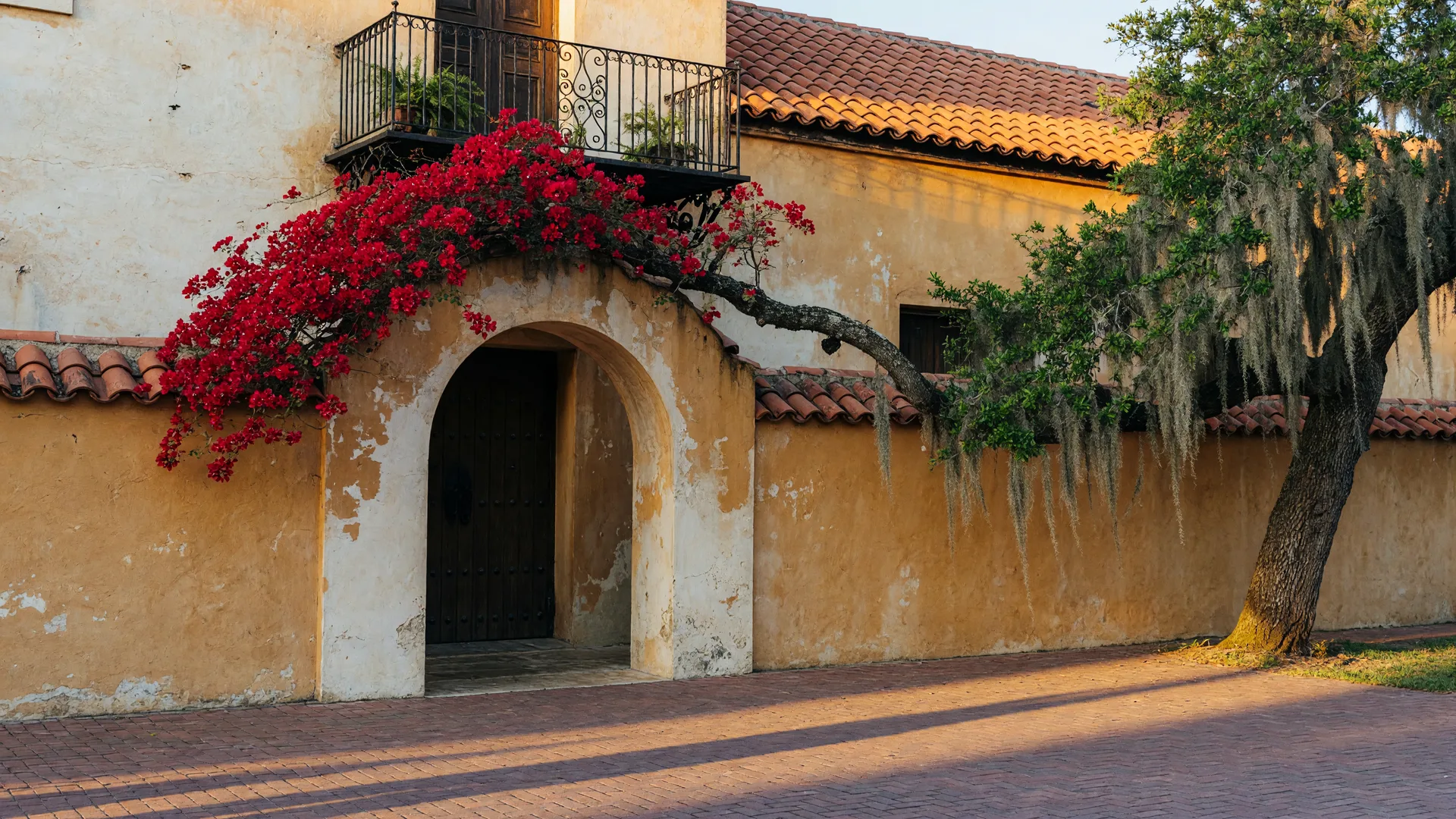
Four centuries of Spanish story, still written into this coast
Pensacola calls the Queen Anne estate at 714 E La Rua St the Old Spanish Consulate, and it is easy to assume the Spanish story begins with the house. It does not. The Spanish story begins in 1559, when colonists landed on this bay six years before St. Augustine was founded, and it runs through presidio forts, a revolutionary-war siege, and the day the flags changed hands downtown, all before the 1890 house ever carried a consulate. This is the longer story behind the landmark.
Luna's town: the first Spanish settlement on the bay
In the summer of 1559 a fleet of about thirteen ships left Veracruz, New Spain, carrying roughly fifteen hundred soldiers, settlers, and missionaries, with horses and more than a million pounds of provisions. The expedition was commanded by Tristán de Luna y Arellano, and its mission was to plant a Spanish town on the northern Gulf coast. On August 14, 1559, the fleet entered the bay the Spanish called Ochuse, on the western edge of what is now Pensacola.
A month later the colony nearly died. On the night of September 19, 1559, a hurricane struck the bay while much of the cargo was still aboard the anchored ships, wrecking several of them. Their remains, now known as the Emanuel Point shipwrecks, are among the oldest shipwrecks in the country, and the storm destroyed most of the stored food. The settlement, Santa María de Ochuse, held on for about two years before it was abandoned in 1561.
That two-year occupation matters. Archaeologists consider Santa María de Ochuse the first multi-year European settlement in what is now the United States, six years before St. Augustine was founded in 1565. In 2015 University of West Florida researchers confirmed the location of the terrestrial settlement in a Pensacola neighborhood, ending a hunt that had run for decades. The first chapter of Pensacola's Spanish story did not happen in a museum; it happened on this bay, a short drive from where 714 E La Rua St now stands.
The presidio century: forts, island towns, and hurricanes
Spain returned to Pensacola Bay for good in November 1698, when Governor Andrés de Arriola founded the Presidio Santa María de Galve on a bluff overlooking the bay, the ground now occupied by Naval Air Station Pensacola. Its wood-and-earth fort, San Carlos de Austria, named for the Habsburg house that ruled Spain, guarded the harbor until 1719, when the French captured and destroyed it.
The Spanish did not leave. In 1722 they settled the western tip of Santa Rosa Island, building the Presidio Isla de Santa Rosa at a place called Punta de Sigüenza, which grew into the largest presidio settlement on the Gulf of Mexico. A pair of hurricanes in 1741 and 1752 wrecked the island town, and by the mid-1750s the settlement had moved inland to become the Presidio San Miguel de Panzacola, the settlement whose name would eventually grow into the city's own.
After 1763 came the British chapter, when Britain took Florida in the treaty that ended the Seven Years' War and made Pensacola the capital of British West Florida. By then a rhythm was established that the street still keeps: every generation rebuilt on the bay, and every storm or war only moved the town a few blocks and started again.
Gálvez and the siege that took West Florida
During the American Revolutionary War, Spain entered the fight on the side of the American colonists, and its target in the South was Pensacola. From March 9 to May 10, 1781, the forces of Bernardo de Gálvez, governor of Spanish Louisiana, besieged the British garrison in Pensacola by land and sea. On May 8 a Spanish shell ignited the British powder magazine, and two days later the British commander, John Campbell, surrendered the town.
The victory gave Spain West Florida and is remembered as one of the Revolutionary War's decisive southern campaigns. The siege lines ran along the high ground north of the old town, a short walk from the block where the estate at 714 E La Rua St would later be built, and the ground is still marked in the streets of Pensacola's historic North Hill district today.
1821: the transfer of the flags at Plaza Ferdinand VII
The Spanish era closed in 1821. Under the Adams-Onís Treaty, signed in 1819 and ratified in 1821, Spain ceded Florida to the United States. On July 17, 1821, in what is now downtown Pensacola's Plaza Ferdinand VII, Andrew Jackson, the newly appointed governor of the territory, lowered the Spanish flag and raised the flag of the United States in a formal ceremony of transfer. The plaza still carries the Spanish king's name, it is designated a National Historic Landmark, and it sits about a ten-minute walk from the front gate of 714 E La Rua St, down La Rua Street to Palafox and onto the square.
The ceremony closed more than two centuries of Spanish claims to this coast, with interruptions, storms, and sieges along the way. In 2021 Pensacola gathered on the plaza to mark the bicentennial of the transfer with reenactments and citywide events, a reminder that the date still lives in the city's civic memory.
The consulate years at 714 E La Rua St
The house came much later, but it arrived on an old theme. Louis D. Marzoni, chief lumber inspector for the lumber baron Henry Baars, built the Queen Anne Victorian at the corner of La Rua Street and 8th Avenue in 1890, at the height of Pensacola's yellow-pine boom. When the Spanish-American War broke out in 1898, Pensacola was a navy town with a large Spanish-speaking merchant class, and Spain needed consular representation in the city. The Marzoni house was pressed into service as the Spanish Consulate in Pensacola, while a neighbor's house a few doors away, Baars' own, acted as the Austro-Hungarian consulate.
Marzoni lived in the house until his death in 1907, and the consulate was a chapter of a few war years, but the name never left. A century later the estate is still called the Old Spanish Consulate, and the house itself is listed on the National Register of Historic Places as the Marzoni House, recognized in 2016 as an exceptional Queen Anne survivor. For the building's own biography, from the lumber boom to the 2014 restoration, our first essay, the house that held a consulate, tells the whole story.
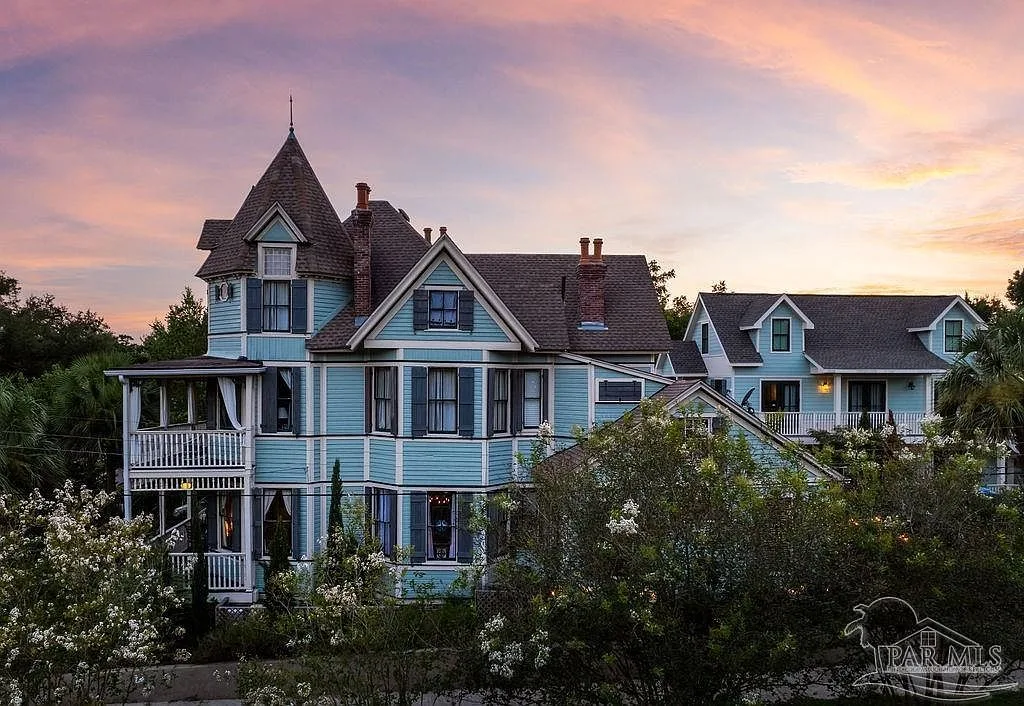
The Old Spanish Consulate today, in Pensacola's Old East Hill
Why the Spanish story matters to the estate today
For a buyer or a traveler, the Spanish thread is not decoration; it is the reason the address is famous. The estate was meticulously restored in 2014, listed on the National Register in 2016, and today operates as an Airbnb Five-Star Superhost income property: 7,574 square feet, twelve suites, and thirteen and a half baths across the main house, the fourth-floor loft, and the carriage house, wrapped around a heated saltwater pool and infinity spa courtyard on a 0.31-acre lot.
Every guest who books a suite steps into a street that has been Spanish, British, Spanish again, and American, with the consulate chapter still in the paint. That is the rarest kind of hospitality asset: a famous name, a registered building, and four hundred years of story in every direction down the hill. The rest of the Spanish trail is walkable from the front gate: Plaza Ferdinand VII, the historic downtown blocks, Seville Square and the Palafox streetscape, and the bay itself where Luna's fleet anchored in 1559.
Showings are by appointment only, and a private tour reads the history in the woodwork. For the investment side of the story, the operating record of a twelve-suite National Register estate, the journal's hospitality essay lays out how the property earns its keep.
"Pensacola's Spanish history is not confined to a museum wing. It is the bay the ships anchored in, the plaza where the flags changed hands, the high ground of the 1781 siege, and the name over the gate at 714 E La Rua St."
Dates and events gathered from historical and official sources in October 2026: the University of West Florida's Luna Settlement research, the Museum of Florida History's forts of Pensacola exhibit, the American Battlefield Trust on the Siege of Pensacola, the Florida Historical Society on the July 17, 1821 transfer, and Pensacola News Journal coverage of the Marzoni House listing.