
History
Ghost tours of Victorian Pensacola: the houses that tell the darker stories
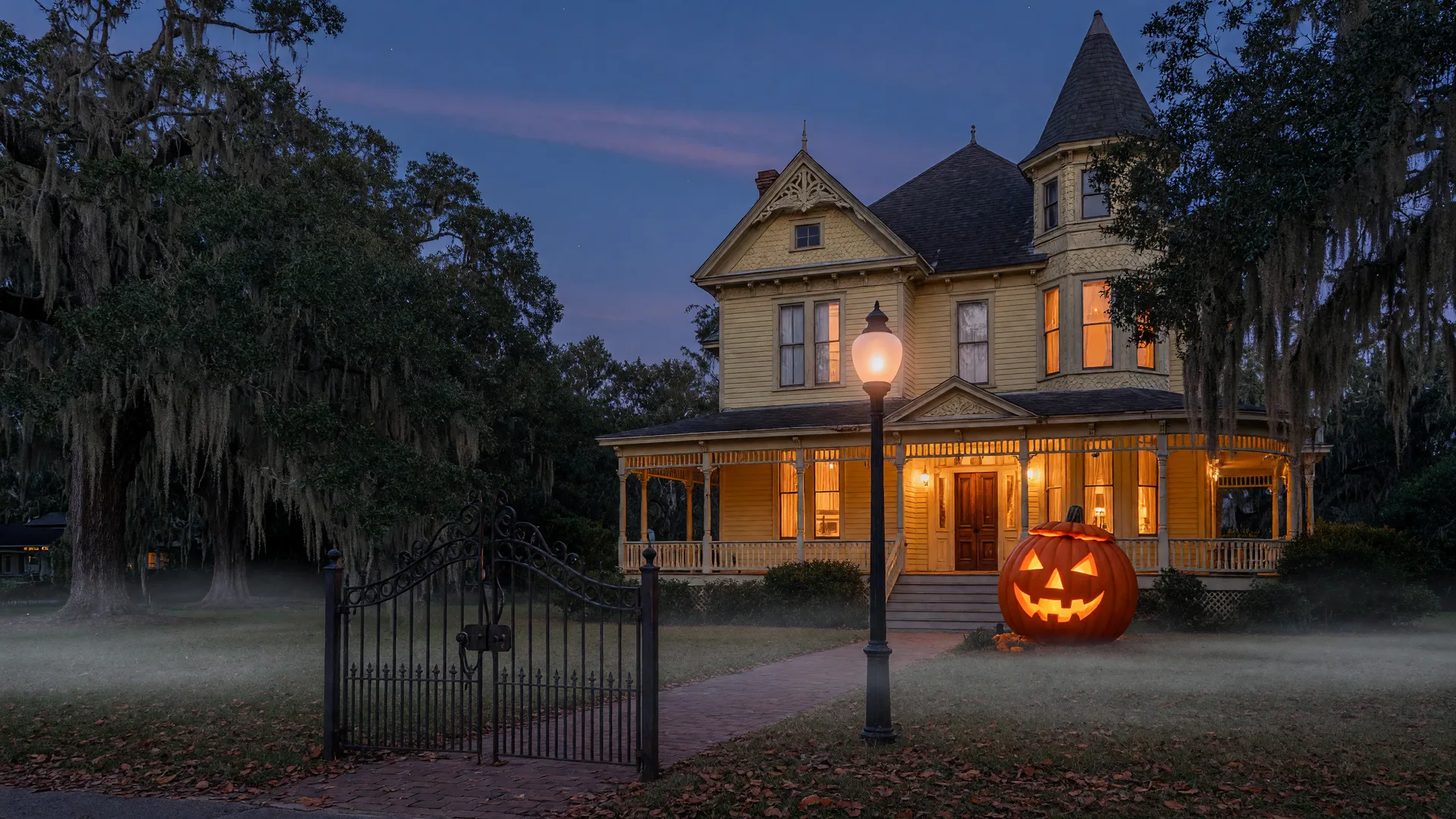
October in the historic districts, where the lamps come on early
October is the month Pensacola's most historic streets lean into evening. By day the Queen Annes and Folk Victorians of the downtown districts read as proper and calm, churches and porches under a canopy of oaks. After dark the same blocks host lantern-lit ghost tours, and a few landmarks lease themselves out to ghost hunters with real equipment. The estate at 714 E La Rua St belongs to that world: a Queen Anne built in 1890 with a turret, stained glass, and 130 years of evenings in the walls. This guide gathers the season's tours and haunted-history stops as they are listed in October 2026, with dates and prices to confirm before you book.
Why October suits a Victorian street
The ghost story as we know it is a Victorian invention, and the architecture Pensacola built in the 1870s and 1880s was made for it. The lumber boom that raised the city's Queen Anne towers gave its builders exactly the ingredients an evening story needs: turrets and gables to cast strange silhouettes, deep porches where a narrator can set a scene, transoms and stair landings glazed in stained glass that turns lamplight red and blue, and gaslit streets that made every doorway a black rectangle until the match struck. The style of that era is its own essay on this site, and it is why the tour guides come back to the same blocks every October: the houses do half the storytelling themselves.
The same neighborhoods are a short walk from 714 E La Rua St. The tour meeting points below cluster around Palafox Street and Government Street, both within easy walking distance of the estate's front gate, and the cemetery is a level stroll south through the historic districts. You can do an evening tour and still be back to the front porch by nine.
Pensacola Ghost Tours: a lantern-lit walk from the Saenger
The most established name on the calendar is Pensacola Ghost Tours: Perdition, Pirates and Purgatory, the US Ghost Adventures production that meets outside the Saenger Theatre at 118 S Palafox St in downtown. It is a one-hour guided walking tour through the historic center, with stops that include Seville Quarter and Plaza Ferdinand VII, the square where the flags formally passed from Spain to the United States in 1821. Your guide carries a lantern and tells the stories of the 1800s city as you walk it, and the tour runs year-round, which makes it a reliable October-to-anytime pick. Tickets typically run about $26 to $32 per adult, and they sell out on fall weekends, so book on the company's site before you plan your evening around it.
Plaza Ferdinand VII is worth knowing independent of the ghost stories: it is one of the few surviving public squares in America where a transfer of national sovereignty took place, and its gas-lit, oak-lined edges are exactly the kind of set a Victorian-era narrative wants. The tour simply gives it a narrator.
Pensacola History & Hauntings: ghost hunting on Government Street
For a more equipment-heavy evening, Pensacola History and Hauntings Ghost Tours (pensacolaghostevents.com) runs its Haunted Pensacola Walking Ghost Tour from 221 E Government St, a few blocks east of Palafox and the closest meeting point to the estate. The signature option is a Haunted Walking Tour with Ghost Hunting, where guests carry real EMF and audio gear into the red-light-era stories, murder-mystery lore, and historic buildings of the downtown districts rather than simply listening to them. It is currently listed for Saturday evenings, 7:00 to 9:00 p.m., with dates running through 2026 and into 2027, at roughly $30 per person. Bring comfortable shoes, and expect to be handed equipment and asked to participate.
Government Street is the estate's own street, one block north of La Rua, which makes this the tour a guest at 714 E La Rua St can attend without a car. The walk also passes some of the finest restored late-1800s storefronts and houses in Old East Hill, so you get a neighborhood history lesson with the hauntings.
Ghosts and Graveyard: the bus tour from the old North Hill depot
If walking tours feel too tame, the two-hour Ghosts and Graveyard Tour of Pensacola covers the dark side of the story in a 1930 Ford transit bus, a vintage ride that departs from 1800 N E St, at the corner of Avery and E Streets, a short drive north of the historic districts. The route ties together the city's cemetery, waterfront, and red-light history into one rolling narrative, and it is listed from about $40 per adult on Viator with free cancellation, which makes it the easiest option to book on a whim and the easiest to plan around.
The departure point sits at the northern edge of Pensacola's older neighborhoods, and the route south rolls past the North Hill streetscape before it reaches downtown: two hours that double as a tour of the Victorian-era districts from the windows of a bus that is itself older than most of the houses' neighbors.
The lighthouse they call one of America's most haunted
The marquee haunted-history experience in the Pensacola area is the Pensacola Lighthouse & Maritime Museum on Naval Air Station Pensacola, a short drive across the bay from the estate. The keeper's quarters and tower appeared on the TV show Ghost Hunters and are routinely described as one of America's most haunted lighthouses. The museum runs after-hours programs, including ghost hunts and sunset and full-moon climbs, on selected Saturday nights throughout the year.
Two practical notes. After-hours tickets go through the museum's reservation system, and because civilian vehicles cannot drive onto the base after hours, guests are picked up by the lighthouse shuttle, so build in time to reach the meeting point. During the day, the lighthouse is open for regular visits at daily admission of $10 for adults and $7 for kids, seniors, and military, with 177 steps up the old spiral if you want the view. The daytime visit is the sensible dry run, and the ghost hunt is the souvenir.
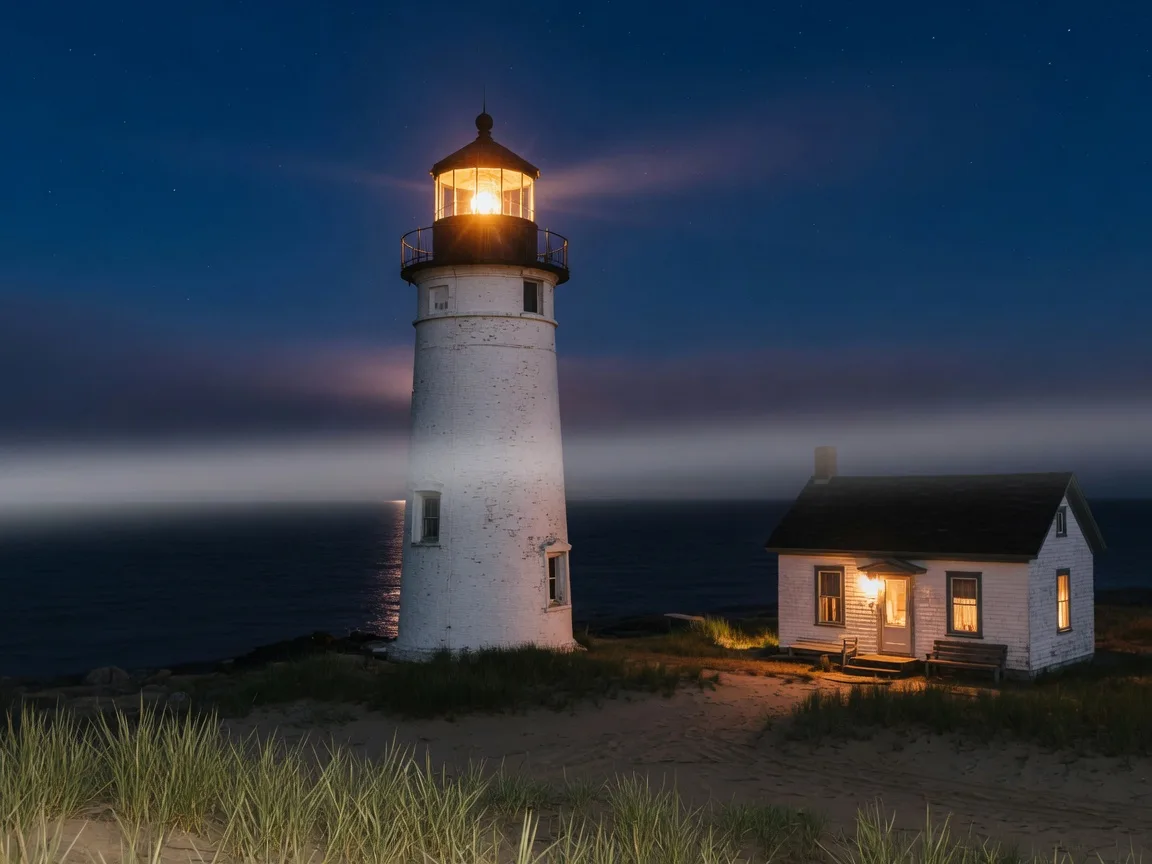
The 1859 lighthouse and its keeper's quarters after dark, across the bay from downtown
The lighthouse district is also the Naval Aviation Museum's home, covered in our essay on Pensacola's military experiences, so a full day on the base can pair fighter jets and a haunted tower in the same afternoon and evening.
St. Michael's Cemetery: the Victorian era carved in stone
The free and most architectural way into the darker side of the Victorian era is St. Michael's Cemetery at 6 N Alcaniz St, eight acres that have been in use as a burying ground since the late 1700s and one of the two oldest cemeteries in Florida. The ground was formally designated a cemetery by the King of Spain in 1807, and it holds roughly 3,200 marked graves, including victims of yellow-fever epidemics and steamship disasters, Civil War figures, and lumber barons. Because it served as the civic burial ground through the Victorian era, its monuments read like a textbook of the period's taste: marble and stone markers, Gothic and Greek Revival forms, and some of the region's finest historic cast iron.
Two monuments are worth seeking out from the gate. The cemetery's two cast-iron markers overlooking the graves of seamen from the Norwegian ship Gertrude, wrecked in 1867, are noted pieces of Victorian-era ironwork with a whole Foundation study devoted to them. And the most imposing marker on the grounds belongs to Daniel F. Sullivan, a lumber baron who died in 1884, which connects the cemetery directly to the boom that built the estate at 714 E La Rua St: the same harbor wealth paid for the Queen Anne on La Rua Street and for the marble standing over its owner downtown.
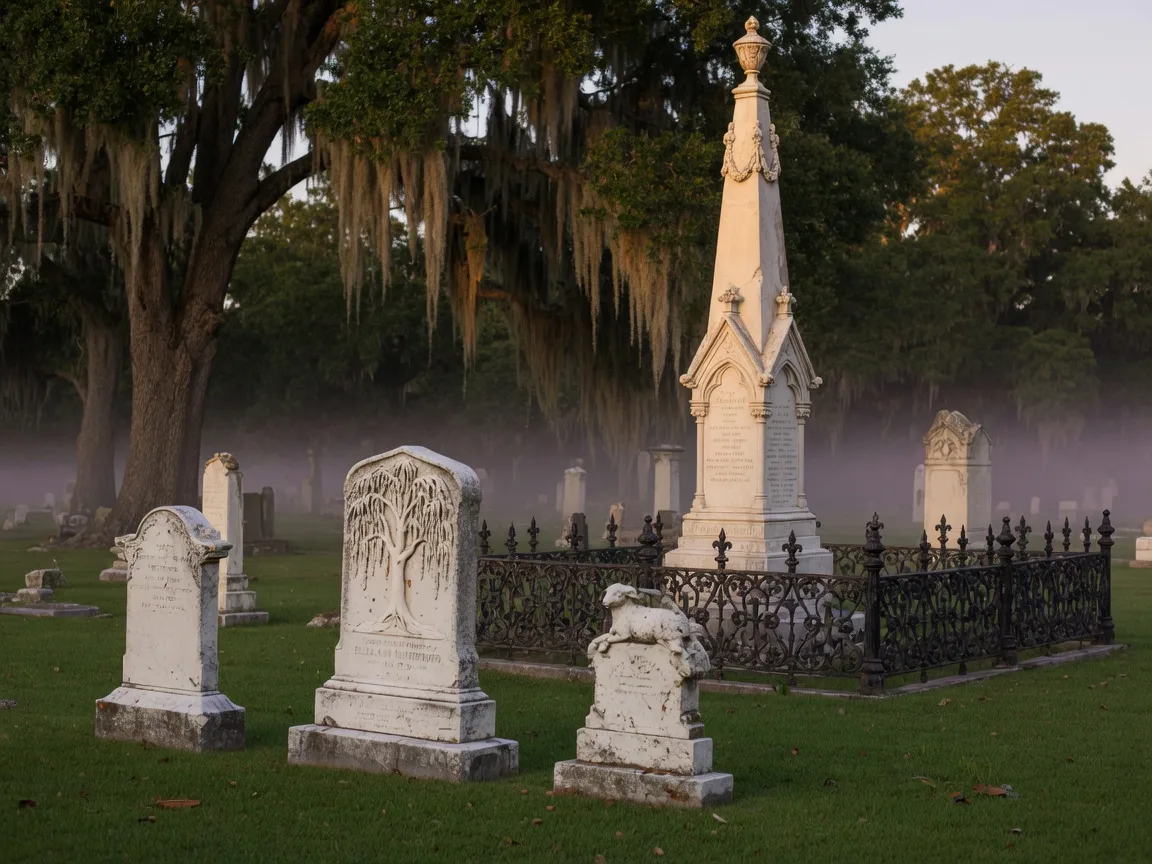
Monuments of the Victorian era, eight acres of marble and iron off Alcaniz Street
The gates are open daily from 9:00 a.m. to 5:00 p.m. at no charge, and the Foundation publishes a numbered self-guided walking tour that covers the notable monuments, including the Priests' Mound, the elevated oval lot where clergy were re-interred in the 1920s. On All Saints' Day, November 1, St. Michael's Basilica holds a remembrance service at the Mound, a quiet bookend to the season's ghost tours. Between the tour routes and the cemetery's own events, the walk is the most atmospheric free hour in the city, and the best place to see the Victorian era's architectural vocabulary turned to marble, iron, and grief.
Make the estate part of the weekend
The estate at 714 E La Rua St is its own chapter of the same evening. The Marzoni House was built in 1890, three stories plus a turret suite and a fourth-floor loft, and its interior is the period at full volume: a grand staircase lit by a stained-glass landing window, woodwork from the lumber mills that built the neighborhood, and 130 years of guests, including the consular years that gave the house the name it still carries. The consulate chapter is its own essay.
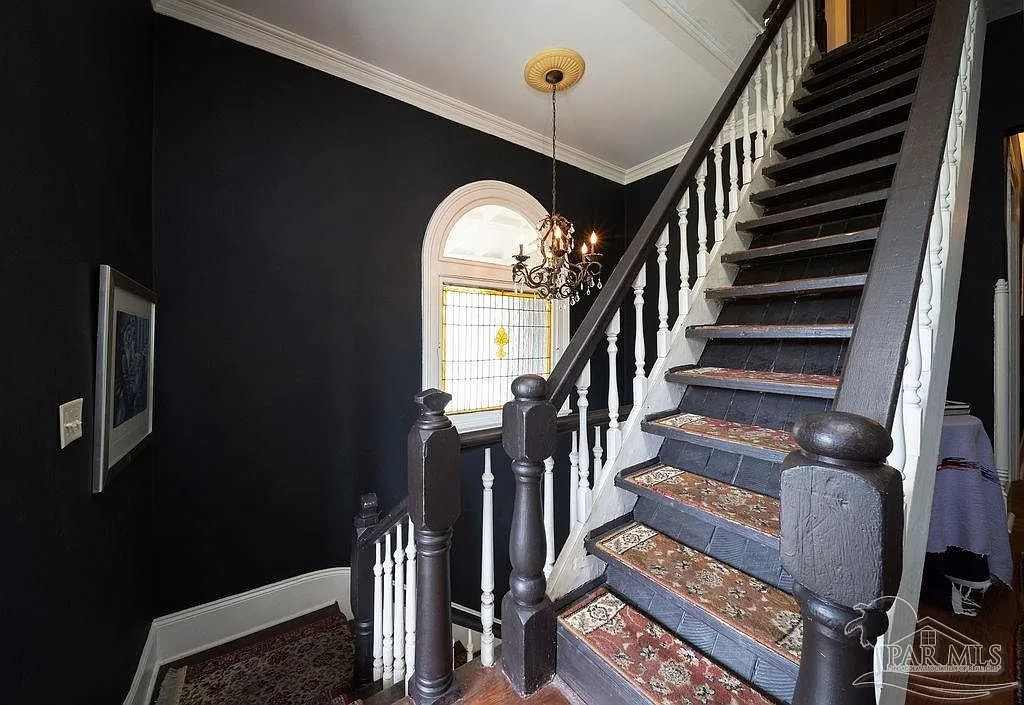
Inside the 1890 Queen Anne, where the stained glass comes on by itself
The practical way to spend the weekend: a daytime walk through St. Michael's Cemetery and the historic districts, dinner on Palafox, an evening ghost tour from Government or Palafox Street, then back to the estate's twelve suites and heated saltwater courtyard for the haunted part you actually control. Showings of the estate are by appointment only, and the door is open to curious buyers rather than ghost hunters, but the atmosphere is the same one the tours sell tickets to see.
For a buyer, the season is a reminder of what makes the property rare beyond its numbers: Pensacola has exactly one protected stock of Victorian architecture, none of it being built again, and the estate is the only place in the city where that era operates as a twelve-suite income property. October just happens to be the month the era puts on its best show.
"Pensacola's Victorian houses were built to be seen by gaslight and moonlight as much as by day. October is the month the districts stop being a museum and start being a story you can walk through."
Tour details gathered from operators' official listings in October 2026 and subject to change; confirm dates and prices before you book: US Ghost Adventures' Pensacola tour, Pensacola History and Hauntings Ghost Tours, the Ghosts and Graveyard Tour on Viator, Pensacola Lighthouse & Maritime Museum, Visit Pensacola's lighthouse ghost tour listing, and the St. Michael's Cemetery Foundation (walking tour, events). Lighthouse after-hours programs require museum shuttle pickup; confirm with the museum before you go.